"Chatphishing" - The New Era of AI-Powered Scams
- May 29
- 4 min read
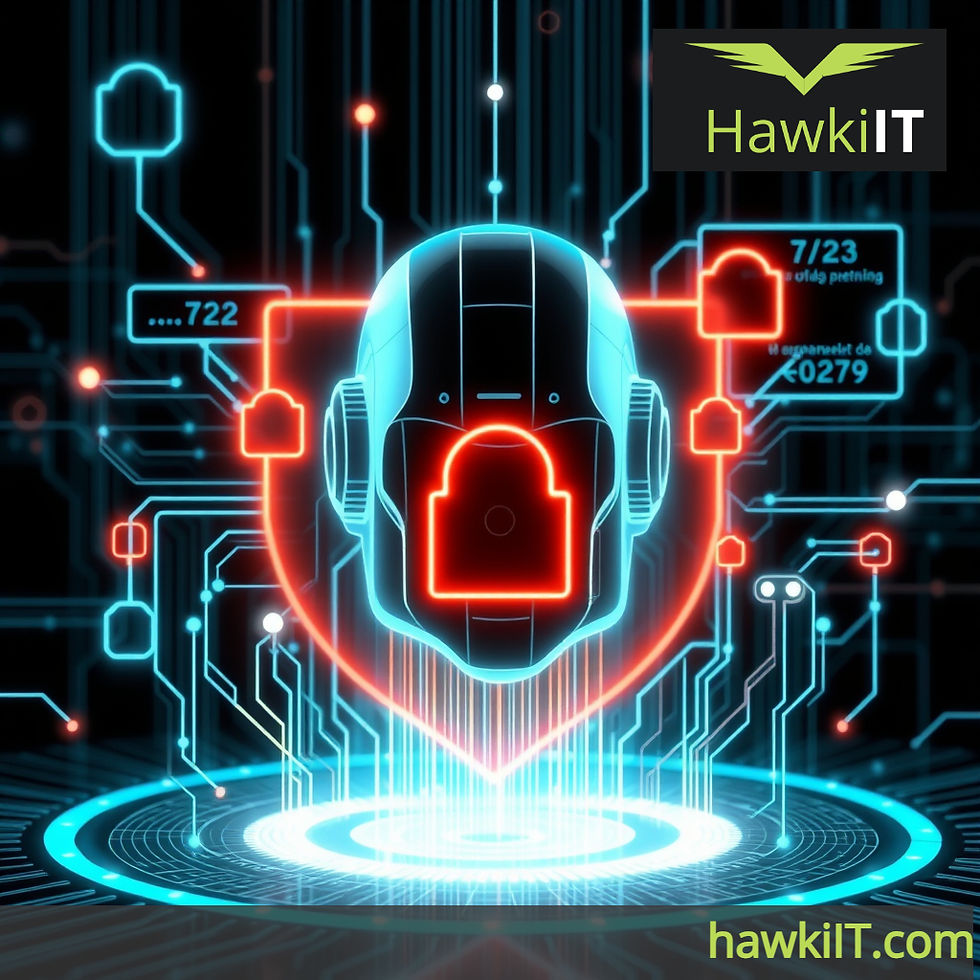
Historically, phishing emails were easy to spot due to awkward phrasing, poor spelling, and glaring grammatical errors. Today, artificial intelligence changes everything.
By utilizing Large Language Models (LLMs) like ChatGPT, cybercriminals have completely revolutionized their tactics, making traditional email defense mechanisms obsolete.
1. Hyper-Personalized and Flawless Lures
Fraudsters can feed an LLM information scraped from a target’s social media profiles (like LinkedIn) and prompt the AI to craft a highly personalized message. It perfectly mimics the tone, vocabulary, and writing style of a trusted contact, brand, or colleague.
2. Impersonating Trusted Brands
Scammers use AI to rapidly generate highly authentic phishing websites, deceptive browser extensions, or fake customer support chatbots. These are specifically designed to trick users into handing over confidential data like login credentials, credit card details, or one-time passcodes.
3. Evading Security Filters
Because AI-generated text is natural, cohesive, and lacks traditional "spam" triggers or typos, these malicious messages regularly slip past standard email security and signature-based anti-phishing filters.
Real-World Case Study: The Multi-Million Dollar Deepfake
AI-powered phishing is no longer a theoretical risk; it is actively costing enterprises millions of dollars. One of the most famous real-world examples occurred in early 2024, targeting the global engineering firm Arup.
The Hook: An AI Email
The attack began when a finance employee in the company's Hong Kong office received an email that appeared to come from the UK-based Chief Financial Officer (CFO). The email requested a highly confidential, secret transaction.
The Trap: Fabricating Reality
Initially, the employee was suspicious and questioned the request. However, the scammers quickly adapted. They invited the employee to a video conference call. When the employee joined the Zoom call, they saw and heard what appeared to be their actual CFO, alongside several other recognizable corporate colleagues.
The Outcome
Reassured by the live video call, the employee carried out 15 separate wire transfers totaling $25.6 million USD ($200 million HKD).
Only after checking with the corporate head office later did the employee realize the truth: every single person on that video call was an AI-generated deepfake. The attackers had combined a basic phishing email with advanced voice and video cloning to stage a flawless corporate heist.
How to Spot AI Red Flags in Everyday Emails
While AI eliminates grammatical errors, it often leaves behind subtle behavioral and contextual clues. Watch for these digital tells:
Uncanny Perfection: Real people write with unique quirks, typos, or varying sentence lengths. AI text often feels overly formal, perfectly structured, and completely devoid of human personality.
Flawless Greeting, Wrong Context: The email may address you perfectly by your full name and job title, but the actual request (e.g., buying gift cards or changing wire details) will feel completely out of character for the sender.
The "Urgency + Isolation" Trap: AI models are excellent at generating high-pressure scenarios. Be wary of messages demanding immediate action while explicitly telling you not to contact anyone else or verify the request through other channels.
Generically Specific Content: The message might contain highly accurate public information about your company or industry, but it will lack the specific, shared internal knowledge or casual references that a real colleague would naturally include.
How to Mitigate the Risk of ChatGPT Phishing
Defending against AI-driven phishing requires a mix of technical solutions and heightened user awareness.
For Individuals
Verify before you click: Never click links or download attachments in unsolicited emails, even if they look legitimate. If you get a suspicious message from a company or a friend, verify it independently by calling them or visiting their official website directly.
Examine links and URLs: Hover over links before clicking them to check the true destination. Watch out for misspellings or domains trying to impersonate official brands (e.g., openai-application.com instead of openai.com).
Implement Multi-Factor Authentication (MFA): Enable MFA/2FA on all your online accounts to add an extra layer of defense against credential theft.
Never share sensitive data in chat: Do not share personal or financial information with unexpected chatbot interactions.
For Organizations
Deploy Advanced Email Security: Upgrade to AI-powered email security gateways that analyze sender behavior, context, and intent rather than just checking for bad grammar.
Security Awareness Training: Educate employees on the existence of AI phishing and train them to recognize the psychological triggers scammers use to create urgency (e.g., threats of account deletion or immediate payment demands).
Protect Corporate AI Usage: Provide employees with secure, enterprise-grade versions of AI tools to prevent the accidental leakage of confidential company data into public AI models.
Designing an AI-Resistant Authentication Policy
To protect an organization from AI-driven credential theft and social engineering, you must implement a strict, technology-enforced authentication strategy.
Enforce Phishing-Resistant MFA: Traditional MFA (like SMS codes or push notifications) can be intercepted by fake AI chatbots. Transition your organization to phishing-resistant methods, such as FIDO2/WebAuthn hardware security keys or passkeys.
Implement Strict Out-of-Band (OOB) Verification: Establish a mandatory policy for all high-risk requests, such as changing vendor bank details or routing payroll. Employees must verify these requests using a secondary, pre-approved channel (like an official phone call or an in-person confirmation), completely independent of the email chain.
Deploy Conditional Access Policies: Configure your identity management system to block login attempts that fall outside of normal parameters. This includes flagging impossible travel (logins from two different countries within an hour) or unauthorized device types.
Adopt a Zero-Trust Architecture: Operate under the assumption that the perimeter has already been breached. Every user and device must be continuously authenticated, authorized, and validated before being granted access to applications and data.
Learn More
Staying up to date on emerging threats is your best defense. Book your free IT Discovery Call to go over your complimentary IT Strategy and game plan.
Book here: hawkiit.com/get-started or connect via email: hello@hawkiit.com
Subscribe to our blogs to get up to date tech updates and follow us on social.